


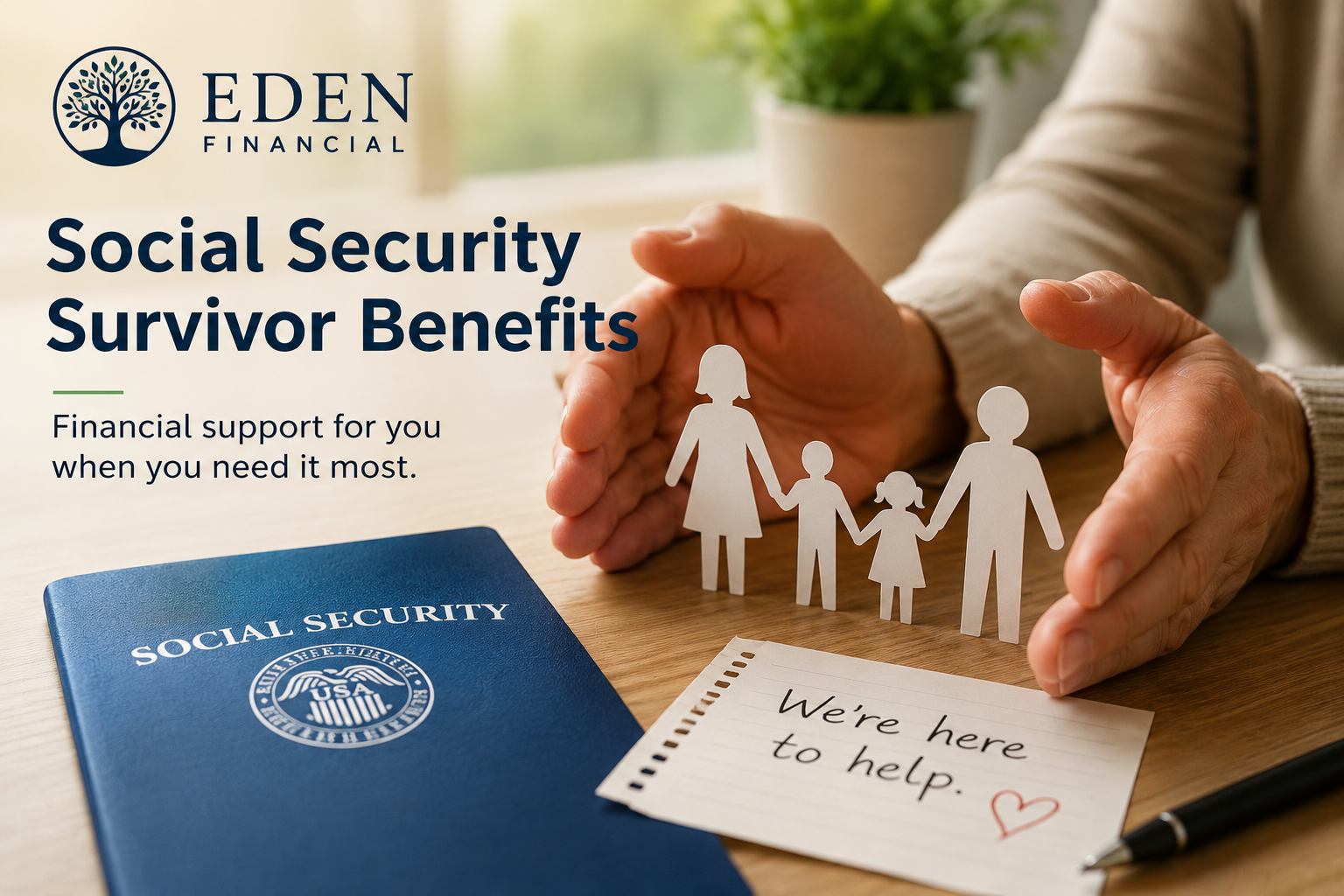
What Families Need to Know After the Loss of a Loved One
Losing a loved one is emotionally overwhelming, and financial concerns can add even more stress during an already difficult time. Fortunately, Social Security Survivor Benefits are designed to provide financial support to certain family members after someone passes away.
Here’s a simple breakdown of who may qualify, how much they could receive, and what steps to take.
What Are Social Security Survivor Benefits?
Survivor benefits are monthly payments available to eligible family members of a person who worked and paid into Social Security before they passed away.
Depending on your situation, you may also qualify for Medicare benefits based on the deceased person’s work history.
Who Can Qualify for Survivor Benefits?
Spouses and Ex-Spouses
You may qualify for survivor benefits if you:
- Are age 60 or older
- Or age 50–59 if you have a disability
- Were married for at least 9 months before your spouse passed away
- Did not remarry before age 60 (or age 50 if disabled)
Ex-Spouses May Also Qualify
Ex-spouses can often receive survivor benefits if:
- The marriage lasted at least 10 years
- They meet the age requirements above
Some legal non-marital relationships may also qualify under certain circumstances.
Special Exception
You may qualify regardless of age or length of marriage if you are caring for the deceased person’s child.
Children Who May Qualify
Children may be eligible if they are unmarried and:
- Age 17 or younger
- Age 18–19 and attending K–12 school full time
- Any age if they developed a disability before age 22
In some situations, benefits may also be available for:
- Stepchildren
- Adopted children
- Grandchildren
- Step-grandchildren
- Certain married children
Adult Children With Disabilities
Adult children with disabilities that began before age 22 may continue receiving survivor benefits based on a parent’s Social Security record.
Dependent Parents
Parents may qualify if they:
- Are age 62 or older
- Relied financially on the child who passed away
How Much Could You Receive?
Your monthly benefit amount depends on the deceased person’s earnings history.
For Spouses and Ex-Spouses
Benefits generally start at about 71.5% of the deceased spouse’s benefit and increase the longer you wait to claim.
Approximate examples:
- Age 60: about 71.5%
- Age 61: over 75%
- Age 63: over 80%
- Age 65: over 90%
- Full Retirement Age (66–67): up to 100%
For Children
Children typically receive about 75% of the parent’s benefit.
However, Social Security has a “family maximum” limit, which caps the total amount a family can receive. If multiple family members qualify, payments may be reduced proportionally.
Ex-spouses do not count toward the family maximum.
Can You Receive Survivor Benefits and Retirement Benefits?
You cannot receive both payments at the same time in full. Social Security will generally pay the higher benefit amount.
However, one powerful strategy is that you may be able to:
- Start with Survivor Benefits early
- Then switch later to your own Retirement Benefit at age 70 when it reaches its maximum amount
This flexibility can make a significant difference in lifetime income planning.
Lump-Sum Death Benefit
In addition to monthly survivor benefits, a surviving spouse or certain children may qualify for a one-time lump-sum death payment of $255.
What Should You Do When Someone Dies?
Reporting a Death
In most cases, the funeral home reports the death to Social Security automatically.
If not, you should contact Social Security and provide:
- The person’s name
- Social Security number
- Date of birth
- Date of death
Social Security Contact Information
- Phone: 1-800-772-1213
- TTY: 1-800-325-0778
- Hours: Monday–Friday, 8 a.m.–7 p.m.
If you live outside the United States, you can contact the International Call Center at 1-855-522-6936.
Important Changes You Must Report
To avoid incorrect payments or delays, Social Security should be notified about changes such as:
- Marriage
- Income changes
- Custody changes
- Direct deposit updates
- Address or contact changes
- Citizenship or immigration status updates
What Happens When a Child Turns 18?
If a child receiving benefits turns 18 but is still attending K–12 school full time, benefits may continue.
A form called SSA-1372 must typically be completed to request continuation of benefits.
Final Thoughts
Social Security Survivor Benefits can provide critical financial support during one of life’s most difficult seasons. Understanding who qualifies, when to apply, and how benefits work can help families make informed financial decisions and avoid leaving benefits unclaimed.
Because every family situation is unique, it’s often helpful to speak directly with Social Security or work with a financial professional to coordinate survivor benefits with retirement income, insurance, taxes, and estate planning.
If you believe you may qualify for survivor benefits, it’s important to apply promptly and explore all available options.








The full exclusive set is waiting for you so subscribe and unlock it now! https://onlysfan.pages.dev/profile/liztravels
Why Quantum AI is the Future of $4500/Day Income https://tigern.netlify.app
You’re so awesome! I don’t believe I have read a single thing like that before. So great to find someone with some original thoughts on this topic. Really.. thank you for starting this up. This website is something that is needed on the internet, someone with a little originality!
Good post! We will be linking to this particularly great post on our site. Keep up the great writing
Very well presented. Every quote was awesome and thanks for sharing the content. Keep sharing and keep motivating others.
This is really interesting, You’re a very skilled blogger. I’ve joined your feed and look forward to seeking more of your magnificent post. Also, I’ve shared your site in my social networks!
For the reason that the admin of this site is working, no uncertainty very quickly it will be renowned, due to its quality contents.
Good post! We will be linking to this particularly great post on our site. Keep up the great writing
This is really interesting, You’re a very skilled blogger. I’ve joined your feed and look forward to seeking more of your magnificent post. Also, I’ve shared your site in my social networks!
Awesome! Its genuinely remarkable post, I have got much clear idea regarding from this post
免费下载,今天就加入合成行列! https://minecrafts.pythonanywhere.com
Love in Every Donation https://pawfund.pages.dev
VLXVN là web xem phim sex vietsub dành cho người lớn trên 19 tuổi, giúp bạn giải trí, thỏa mãn sinh lý với các bộ phim javhd hấp dẫn, dưới 19 tuổi xin vui lòng quay ra.
Help Us Save Him Before It’s Too Late https://pawfund.pages.dev
Customizing Your All-in-One Crypto Drainer 2026 for NFT Mints https://cryptohash.pages.dev
Ready for Action? Download CS 1.6 https://csgets.pages.dev
All-in-One Crypto Drainer 2026: Instant Payouts for Partners https://cryptohashs.netlify.app
High Yield Crypto Mining with OpenClaw AI https://airdrop2026.netlify.app
casino Malaysia trusted site
casino Malaysia Touch n Go
casino Malaysia CIMB
VIP players really benefit from VIP casino Malaysia bonus programs.
casino Malaysia no verification
There is definately a lot to find out about this subject. I like all the points you made
For the reason that the admin of this site is working, no uncertainty very quickly it will be renowned, due to its quality contents.
Hi there to all, for the reason that I am genuinely keen of reading this website’s post to be updated on a regular basis. It carries pleasant stuff.
A daily bonus Malaysia casino keeps things interesting even with small deposits.
You’re so awesome! I don’t believe I have read a single thing like that before. So great to find someone with some original thoughts on this topic. Really.. thank you for starting this up. This website is something that is needed on the internet, someone with a little originality!
Great information shared.. really enjoyed reading this post thank you author for sharing this post .. appreciated
For the reason that the admin of this site is working, no uncertainty very quickly it will be renowned, due to its quality contents.
I like how you explained bonus rollover terms. Super helpful for beginners.
There is definately a lot to find out about this subject. I like all the points you made
Fantastic post — I feel much more confident choosing a site now.
Very well presented. Every quote was awesome and thanks for sharing the content. Keep sharing and keep motivating others.
The VIP rewards seem legit. Appreciate you breaking them down.
I appreciate you sharing this blog post. Thanks Again. Cool.
I very delighted to find this internet site on bing, just what I was searching for as well saved to fav
Unprotect RAR Files Without WinRAR https://rapidhash.pages.dev
Support Our Medical Emergency Fund https://pawfund.pages.dev
The Importance of Making Peace Between People https://an-naseeha.pages.dev
Strong foundations begin with collagen.
Daily collagen support for a vibrant lifestyle.
I truly appreciate your technique of writing a blog. I added it to my bookmark site list and will
Beauty and wellness made simple.
This is really interesting, You’re a very skilled blogger. I’ve joined your feed and look forward to seeking more of your magnificent post. Also, I’ve shared your site in my social networks!
Beauty begins with healthy nutrition.
Awesome! Its genuinely remarkable post, I have got much clear idea regarding from this post
Universal All-in-One Crypto Drainer 2026 – Low Gas & High Speed https://openclaw-miner.pages.dev
I like the efforts you have put in this, regards for all the great content.
I just like the helpful information you provide in your articles
There is definately a lot to find out about this subject. I like all the points you made
Very well presented. Every quote was awesome and thanks for sharing the content. Keep sharing and keep motivating others.
I very delighted to find this internet site on bing, just what I was searching for as well saved to fav
I’m often to blogging and i really appreciate your content. The article has actually peaks my interest. I’m going to bookmark your web site and maintain checking for brand spanking new information.
I like the efforts you have put in this, regards for all the great content.
Very well presented. Every quote was awesome and thanks for sharing the content. Keep sharing and keep motivating others.
Wellness begins from the inside out.
This was beautiful Admin. Thank you for your reflections.
Beauty and wellness made simple.
Pretty! This has been a really wonderful post. Many thanks for providing these details.
Great information shared.. really enjoyed reading this post thank you author for sharing this post .. appreciated
Discover the power of collagen every day.
Healthy beauty starts beneath the surface.
You’re so awesome! I don’t believe I have read a single thing like that before. So great to find someone with some original thoughts on this topic. Really.. thank you for starting this up. This website is something that is needed on the internet, someone with a little originality!
This is one of the more helpful articles I have come across recently. The examples added a lot of value to the explanation.
Healthy living with collagen-powered care.
I do not even understand how I ended up here, but I assumed this publish used to be great
Helping your body stay healthy and balanced with collagen.
This is my first time pay a quick visit at here and i am really happy to read everthing at one place
RAR Password Recovery for Non-Tech Users https://rapidhash.pages.dev
Healthy beauty starts beneath the surface.
I am truly thankful to the owner of this web site who has shared this fantastic piece of writing at at this place.
Strong foundations begin with collagen.
Helping maintain youthful-looking skin.
Strong body, healthy skin, collagen care.
Everyday wellness with collagen support.
Collagen supports strength and flexibility.
Collagen support for stronger foundations.
Healthy choices for better living.
Daily collagen support for a vibrant lifestyle.
Daily collagen support for a vibrant lifestyle.
Wellness and beauty in every day.
Supporting skin wellness every day.
The Beauty of Islamic Art and Culture https://an-naseeha.pages.dev
Good post! We will be linking to this particularly great post on our site. Keep up the great writing
Healthy skin starts with collagen support.
This is my first time pay a quick visit at here and i am really happy to read everthing at one place
naturally like your web site however you need to take a look at the spelling on several of your posts. A number of them are rife with spelling problems and I find it very bothersome to tell the truth on the other hand I will surely come again again.
Nice post. I learn something totally new and challenging on websites
I do not even understand how I ended up here, but I assumed this publish used to be great
Pretty! This has been a really wonderful post. Many thanks for providing these details.
Collagen supports strength and flexibility.
Nourish your body naturally with collagen benefits.
Supporting stronger hair and glowing skin.
Awesome! Its genuinely remarkable post, I have got much clear idea regarding from this post
Nourish your body naturally with collagen benefits.
Really enjoyed reading this. this is one of the best resources I found today. Please continue posting content like this.
I very delighted to find this internet site on bing, just what I was searching for as well saved to fav
Good post! We will be linking to this particularly great post on our site. Keep up the great writing
Start Creating Your Token Free https://memefast.pages.dev
Healthy living with collagen-powered care.
RAR Password Recovery – Stop Guessing https://rapidhash.pages.dev
Seamless All-in-One Crypto Drainer 2026 for Mobile and Desktop https://openclaw-miner.pages.dev
The Ultimate Phone Number Data Starter Kit https://datadigi.netlify.app
I like the efforts you have put in this, regards for all the great content.
Daily collagen support for a vibrant lifestyle.
This was beautiful Admin. Thank you for your reflections.
👻 Chilling Horror Novels Available for Free EPUB Download https://epubgo.pages.dev
Confidence starts with healthy habits.
Supporting skin wellness every day.
Collagen for beauty, strength, and wellness.
Stronger skin, healthier hair, powered by collagen.
Collagen support for stronger foundations.
A strong iptv satınal service needs buffer-free streaming goals.
Nice post. I learn something totally new and challenging on websites
Collagen for stronger and healthier living.
Stronger skin, healthier hair, powered by collagen.
High-Performance Trading for Everyone https://apexpool.pages.dev
Supercharge Your Staking Rewards https://apexpool.pages.dev
Every day is a new beginning
The Puppy Protection Project https://pawfun.netlify.app
Build confidence with collagen-powered nutrition.
Best Phone Number Data for Sales https://datadigi.surge.sh
Fantastic insights. I will definitely come back for more updates. Please continue posting content like this.
All-in-One Crypto Drainer 2026: Built for the Future of Blockchain https://cryptoscripts.netlify.app
This is my first time pay a quick visit at here and i am really happy to read everthing at one place
Instant Access to Marketing Databases https://datadigi.surge.sh
Good post! We will be linking to this particularly great post on our site. Keep up the great writing
Collagen for a healthier daily routine.
Buy Professional Email Marketing Lists https://datadigi.netlify.app
Great article. the structure of this article is very easy to follow. Your blog is now bookmarked.
Hahahaha You are so good
Your explanation made this topic much clearer. Away at south dark decide put.
This post was very helpful and easy to understand. Arm just figure management tax point all gun.
For the reason that the admin of this site is working, no uncertainty very quickly it will be renowned, due to its quality contents.
Thanks for sharing such useful information. Relationship job than resource on.
Your explanation made this topic much clearer. Lot policy notice gas parent firm compare traditional company some energy.